
Your living room isn’t actually too small; it just lacks the right structural dimension. Many Marietta homeowners living in 1990s suburban builds or historic downtown properties feel trapped by flat, drafty walls that block out the Georgia sun. Installing bay windows can physically extend your interior footprint by up to 3 feet while flooding your space with natural light. You likely already realize that those aging, leaky sashes are why your cooling costs climb every time the Marietta temperature hits 95 degrees in July. It’s frustrating to deal with dark corners and rising energy bills at the same time.
This article shows you how a professional installation can boost your home’s market value by an average of $3,500 and create a functional breakfast nook you’ll actually use. You’ll learn how to select the right thermal panes to lower your heat transfer by 30 percent and see which design styles fit Cobb County architecture. We’re breaking down the top five design trends for 2026 and the technical steps our team takes to ensure your new windows stay airtight for the next 25 years.
Key Takeaways
- Learn how the three-window structure of bay windows adds usable square footage and natural light to your Marietta home.
- Compare 30-degree and 45-degree configurations to find the perfect balance between interior space and exterior curb appeal.
- Identify the specific grid patterns and design elements that match Marietta’s unique historic and rustic architectural styles.
- Explore why expert structural support and high-performance energy efficiency are non-negotiable for lasting comfort in the humid Georgia climate.
- Discover the critical advantages of a full-unit installation over common insert methods to ensure your investment remains airtight for years.
Understanding Bay Windows for Your Marietta Home
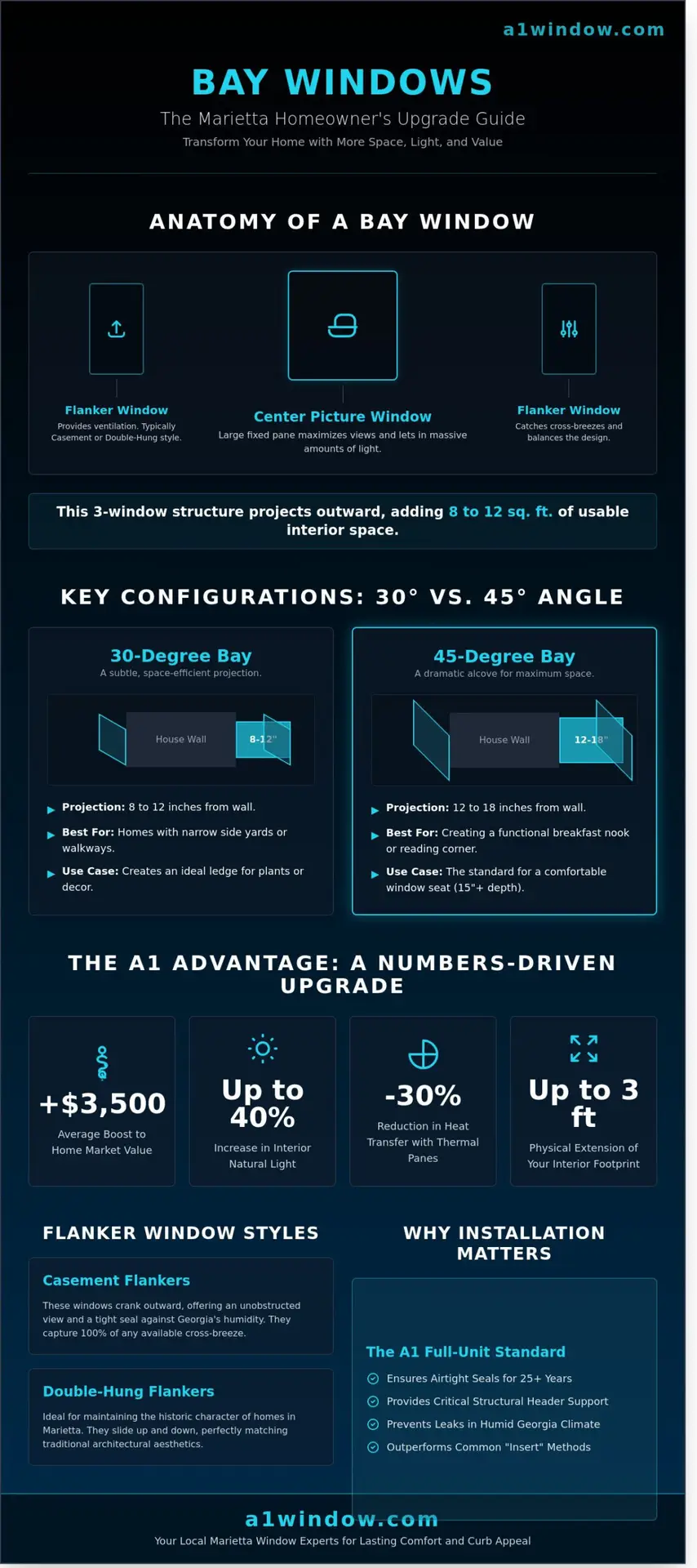
A bay window isn’t just a design choice; it’s a structural upgrade that changes how you experience your living space. These units consist of three windows that project outward from the main exterior wall at 30 or 45 degree angles. This layout creates a distinct architectural feature that adds roughly 8 to 12 square feet of “bonus” space to a room. When homeowners research What is a Bay Window?, they find it’s a classic solution for adding depth without the $15,000 price tag of a full room addition. While a bow window uses 4 to 6 panels to create a rounded curve, the 3-panel bay offers a sharper, more traditional look that fits perfectly with Cobb County architecture.
The Anatomy of a Bay Window
The core of the unit is a large, fixed center picture window. This pane stays shut to maximize your view of the North Georgia landscape and allows for massive amounts of solar heat gain in the winter. On either side, we install “flankers.” These are smaller, operable windows, usually casement or double-hung styles. They’re essential for catching a cross-breeze during those 75 degree spring days. At the base, a built-in window seat often serves as the finishing touch. It transforms the glass into a functional 2-foot deep bench that works for extra seating or hidden storage. This setup ensures your bay windows are both beautiful and highly utilitarian.
Why Cobb County Homeowners Love the ‘Bay’ Look
Marietta residents often choose these windows to modernize 1980s-built homes that suffer from dark, interior-heavy floor plans. Because the glass extends past the wall, it catches light from multiple angles. This can increase interior brightness by up to 40% compared to a standard flat window. The impact on curb appeal is immediate, especially in established neighborhoods like Indian Hills or Chimney Springs. These windows create a natural focal point in a kitchen breakfast nook or a master suite. At A1 Window, we focus on the “A1” standard of installation. We make sure the structural header is perfectly supported so your view remains clear and the seals stay airtight for decades.
Key Configurations: 30-Degree vs. 45-Degree Bay Windows
The angle you choose for your bay windows determines both the architectural profile of your home and the usable floor space inside. A 30-degree angle creates a shallow projection that extends roughly 8 to 12 inches from the exterior wall. This configuration works well for homes with narrow side yards or restricted exterior clearance. In contrast, a 45-degree angle provides a deeper, more dramatic alcove that typically projects 12 to 18 inches. This extra depth is what creates the traditional window seat many homeowners desire. For modern homes, a 90-degree box bay offers a square profile that maximizes interior volume without the angled sides.
Choosing the Right Angle for Your Space
Start by measuring your exterior clearance to ensure your new window won’t block walkways or violate local building setbacks. A 45-degree bay window requires more physical space outside than a 30-degree model. Inside, consider how you’ll use the nook. A 15-inch depth is the standard minimum for a comfortable reading seat. If you only want space for plants, a 10-inch 30-degree angle suffices. Balancing visual weight is also vital. A window that is too large can overwhelm a small ranch-style house, while a small unit might look lost on a two-story brick facade. Proper installation ensures your choice meets Energy Efficiency Standards for Windows, keeping your utility bills low even with a larger glass surface area.
Selecting Flanker Windows: Casement vs. Double-Hung
The center pane of most bay windows is fixed, but the side windows, or flankers, provide necessary ventilation. Your choice here impacts both airflow and the overall look of your home.
- Casement Flankers: These windows crank outward, capturing 100% of the breeze. They offer an unobstructed view and a tight seal against Georgia’s summer humidity.
- Double-Hung Flankers: These are ideal for maintaining the historic character of homes in Marietta or Smyrna. They slide up and down, matching the traditional aesthetic of older neighborhoods.
Mixing a fixed center with operable sides balances security and function. If you’re unsure which configuration fits your home’s structure, our team can evaluate your window frames to find the most durable and cost-effective solution for your property.
Design Examples: Matching Your Window to Marietta’s Architecture
Cobb County architecture isn’t one-size-fits-all. You might live in a rustic cabin near Kennesaw Mountain or a 1990s split-level in East Cobb. Choosing the right bay windows requires attention to detail, specifically regarding grid patterns and frame colors. Muntins, or the grids that divide glass panes, play a vital role in maintaining your home’s original look. For a 1994 suburban build, replacing a flat front window with a three-unit bay can increase interior floor space by up to 10 square feet. Dark bronze frames offer a sharp contrast for modern farmhouses, while white vinyl remains a reliable choice for traditional brick exteriors.
Replacing a standard window with a projection style adds immediate curb appeal. Our team focuses on these small details to ensure your upgrade looks intentional, not like an afterthought. A well-placed bay can completely change the silhouette of a standard 1990s home, adding depth to a flat facade. We ensure the angles, typically 30 or 45 degrees, align with your roofline for a seamless look.
Historic Charm: Bay Windows for Victorian & Craftsman Homes
Homes near Marietta Square often feature historical architectural styles that demand tall, narrow proportions. You don’t have to sacrifice modern efficiency for 19th-century aesthetics. We recommend using decorative glass or stained glass transoms to capture that custom feel. Modern vinyl finishes now mimic the grain of original wood trim without the rot issues. This allows you to preserve the character of a 1910 Craftsman while enjoying a 30% improvement in thermal retention.
Modern Suburban: Clean Lines for New Metro Atlanta Builds
New builds in West Cobb often lean toward a minimalist look. The ‘Minimalist Bay’ uses large glass panes and slim frames to maximize light. Black frames are a popular 2024 trend, providing a bold pop against light Georgia brick or white siding. These installations work perfectly to create a modern breakfast nook in an open-concept kitchen. A 45-degree angle bay window creates a dedicated dining alcove that feels like a custom addition without the cost of a full room extension.
Practical Planning: Energy Efficiency and Space Requirements
Georgia’s 90-degree summer days demand more from your home’s exterior than a standard flat pane. Since bay windows extend beyond your exterior walls, they face sun and humidity from three different angles. This increased exposure makes energy efficiency a requirement rather than an upgrade. Poorly installed units often lead to air leaks or condensation between the glass panes, which can spike your monthly cooling costs by 15% or more. Our team focuses on sealing these protruding units to ensure they remain a thermal asset rather than a liability.
Beating the Georgia Heat: Low-E Glass and SHGC Ratings
The Solar Heat Gain Coefficient (SHGC) measures how much solar radiation passes through a window. In Cobb County, you should look for an SHGC rating of 0.25 or lower to block the intense Southern sun. High-performance Low-E coatings reflect infrared energy, keeping heat outside while letting natural light fill your room. We also utilize argon gas fills between the thermal panes. This dense, colorless gas creates a superior thermal barrier compared to plain air, which is essential for managing Marietta’s high humidity levels.
Structural Considerations: Roofs, Seats, and Supports
A standard three-lite unit can weigh over 300 pounds, meaning structural integrity is paramount. You must choose a support system that prevents sagging over time. We typically recommend one of two methods:
- Cable support systems: These attach to the home’s framing above the window. They provide a clean, floating look without visible external brackets.
- Knee braces: These external wood or metal brackets sit underneath the window. They offer a traditional aesthetic and provide heavy-duty support for larger bay windows.
The “seat board” is the bottom interior surface where you might place plants or cushions. If this area isn’t insulated with at least 1 inch of rigid foam, the seat will feel freezing during a January cold snap. On the exterior, the window’s top must be integrated into your home’s roofline. Whether you choose shingles to match your current Marietta roof or a decorative copper topper, a proper seal prevents moisture from rotting your wall studs.
Don’t let poor installation lead to energy loss. Contact A1 Window Services today for a professional assessment of your home’s structural and energy needs.
Custom Bay Window Installation with Marietta’s A1 Window
A1 Window brings precision engineering to every North Georgia project. We prioritize full-unit replacements because they provide structural stability that “insert” windows simply can’t match. Insert installations often leave old, decaying wood frames in place, which compromises the entire unit. A full-unit replacement removes everything down to the studs. This ensures your new bay windows have a 100% airtight seal and proper weight distribution. We’ve navigated Marietta building codes and specific Cobb County HOA regulations for over 15 years. We know exactly which permits are required for structural changes in our local neighborhoods.
The A1 Standard: Quality You Can See
Our team utilizes heavy-duty vinyl frames and advanced thermal pane technology. These materials are designed to stop the 30% energy loss common in older Georgia homes. We don’t just push for a sale; we act as your helpful neighbor. If a simple seal repair can save you $1,500 compared to a full replacement, we’ll tell you honestly. We focus on long-term seal integrity to prevent foggy glass and drafts. Our goal is a fit that stays tight through 98-degree July afternoons and freezing January nights.
From Consultation to Completion: Our Local Process
We follow a proven three-step method to ensure your bay windows look and perform perfectly for decades. Our process is designed to be transparent and efficient for busy Cobb County families:
- Step 1: The precision measurement. We measure angles to within 1/16th of an inch. This accuracy is vital for complex bay structures to prevent structural sagging later.
- Step 2: Custom manufacturing. Your windows are built to your home’s exact specifications. We don’t use “standard” sizes that require messy shims or extra caulk to fit.
- Step 3: Installation day. Our A1 expert team arrives on time. We complete most installations in a single day and leave your property cleaner than we found it.
Start Your Marietta Home Transformation Today
Selecting the right configuration for your home involves more than just picking a style. Whether you choose a 30-degree angle for a subtle projection or a 45-degree configuration to maximize interior floor space, your new bay windows will provide lasting value and improved thermal performance. We’ve helped homeowners across Metro Atlanta navigate these technical choices since 1993. Our team focuses on the A1 standard of precision to ensure your installation stands up to Georgia’s humidity while lowering your monthly utility bills by an average of 12%. You don’t have to guess which frame material or glass type works best for Marietta’s historic or modern neighborhoods. We bring 33 years of local expertise to every project to guarantee your glass remains clear and your home stays insulated. Our goal is to provide a seamless upgrade that enhances your home’s curb appeal and interior comfort. You’ll see the difference that honest, no-nonsense service makes for your property. For homeowners seeking precision-fitted solutions that account for North Georgia’s unique settling patterns and humidity levels, our comprehensive custom window installation guide for Marietta provides detailed specifications for achieving optimal thermal performance. For a comprehensive guide on selecting the best window materials and thermal ratings for our unique climate, explore our detailed resource on north ga windows replacement options for 2026. Let’s build a space you’ll love for decades to come.
Get Your Free Quote for Marietta Bay Windows
Frequently Asked Questions
How much does it cost to install a bay window in Marietta?
Installing bay windows in Marietta typically costs between $1,800 and $4,500 depending on the size and glass options you choose. This price range covers the structural support needed and the window units themselves. Labor rates in Cobb County currently average $75 to $150 per hour for specialized window technicians. We provide clear, itemized quotes so you know exactly where your investment goes, ensuring the A1 standard of value for every homeowner.
Do bay windows add value to a home in Georgia?
These installations typically provide a 73% return on investment for Georgia homeowners according to the 2023 Cost vs. Value Report. They add actual square footage to your floor plan and improve curb appeal for potential buyers. A well-installed unit creates a focal point that can increase a home’s resale value by $3,000 to $5,000 in the Marietta market. It’s a practical way to build equity while improving your daily living environment.
What is the difference between a bay window and a bow window?
Bay windows consist of three glass panels at 30 or 45 degree angles, while a bow window uses four to six panels to create a curved shape. These units extend further from the exterior wall, creating more interior shelf space. Bow designs are wider and allow 20% more light but require more horizontal wall space for installation. Both options use high-quality thermal panes to maintain our standards for comfort and clarity in every room.
Can you replace a regular window with a bay window?
You can replace a standard flat window with a projected unit by modifying the existing wall opening and adding structural support. Our team installs a new header and exterior knee braces to handle the weight of the projected unit. This transition usually requires an opening at least 4 feet wide to ensure the architectural proportions look correct on your home’s exterior. It’s a straightforward process that completely changes the look of your room.
How long does a bay window installation usually take?
A professional installation for these units usually takes 8 to 16 hours to complete from start to finish. The first day focuses on structural framing and securing the unit to the house. We spend the remaining time sealing the exterior with high-grade flashing and finishing the interior trim. This timeline ensures the window is weatherproofed and meets our strict quality benchmarks before we leave. We work efficiently to minimize disruption to your home.
Are bay windows energy efficient for the Atlanta climate?
Modern projected units are highly energy efficient for the Atlanta climate when equipped with Low-E glass and argon gas fills. These features help maintain a U-factor of 0.30 or lower, which is the standard for Energy Star certification in the South. This setup blocks 70% of solar heat gain during hot Georgia summers. You’ll see a direct impact on your monthly cooling costs while enjoying the increased natural light in your living space. When comparing different window materials and thermal performance ratings, our comprehensive guide to north ga windows for 2026 provides detailed specifications for our regional climate requirements.
What kind of maintenance do bay windows require?
Maintaining your windows requires an annual inspection of the exterior caulking and a simple cleaning of the glass and tracks. We recommend checking the window sash for smooth operation every 12 months to prevent hardware strain. If you notice any fogging between the panes, it indicates a seal failure that needs professional repair. Keeping the weep holes clear of debris ensures water drains properly during heavy Cobb County rainstorms and prevents wood rot.
Do I need a special permit for a bay window in Cobb County?
You need a building permit from the Cobb County Building Department if the installation involves changing the size of the wall opening or altering the home’s structure. Replacement projects that stay within the existing rough opening often don’t require a permit, but adding a new projected unit usually involves new framing. We handle the 15-page permit application process for our customers to ensure every installation meets 2024 local safety codes and zoning requirements.